Back to Projects
Solo ResearcherOct 2024 - Apr 2025

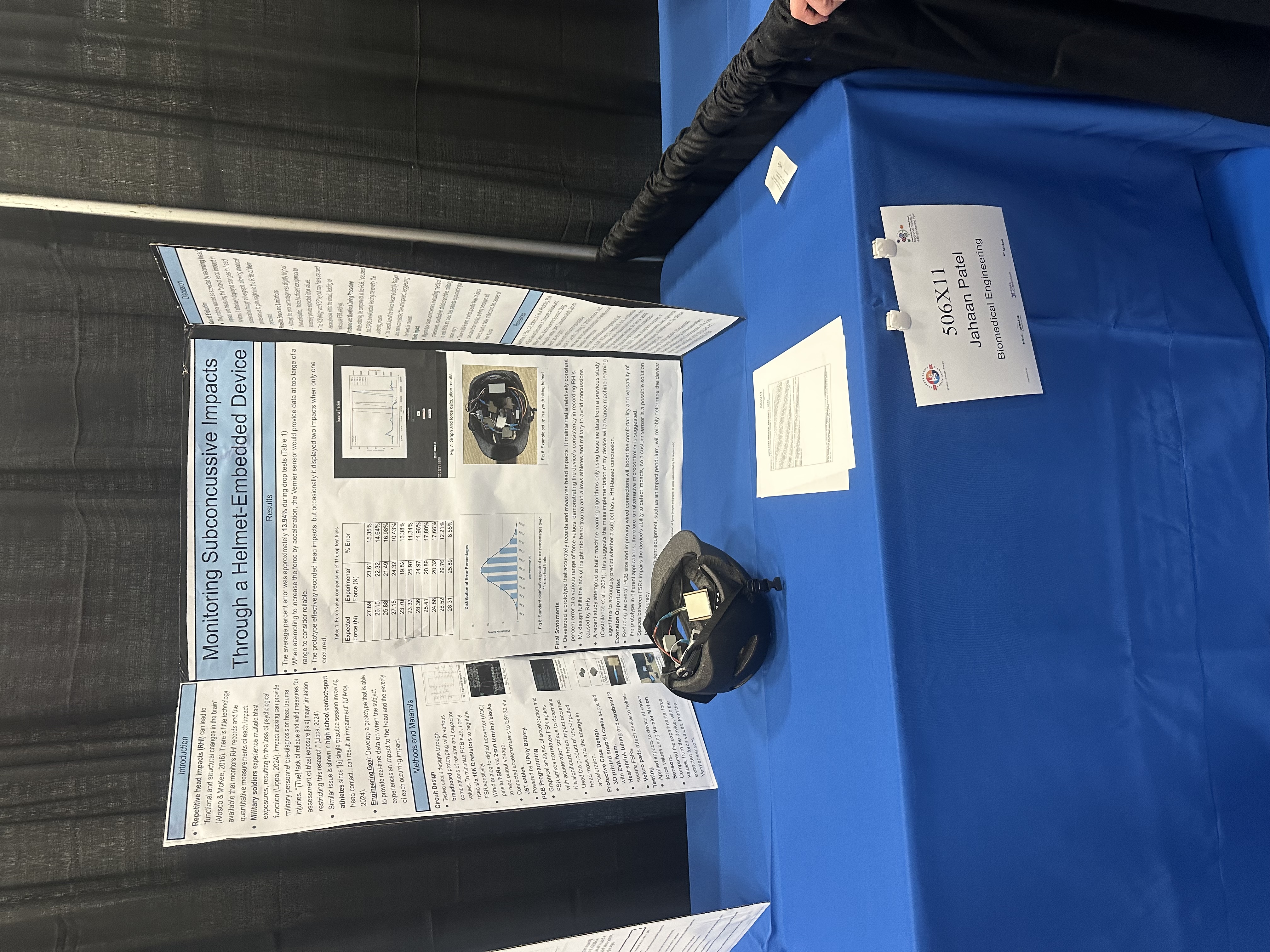
Monitoring Subconcussive Impacts Through a Helmet-Embedded Device
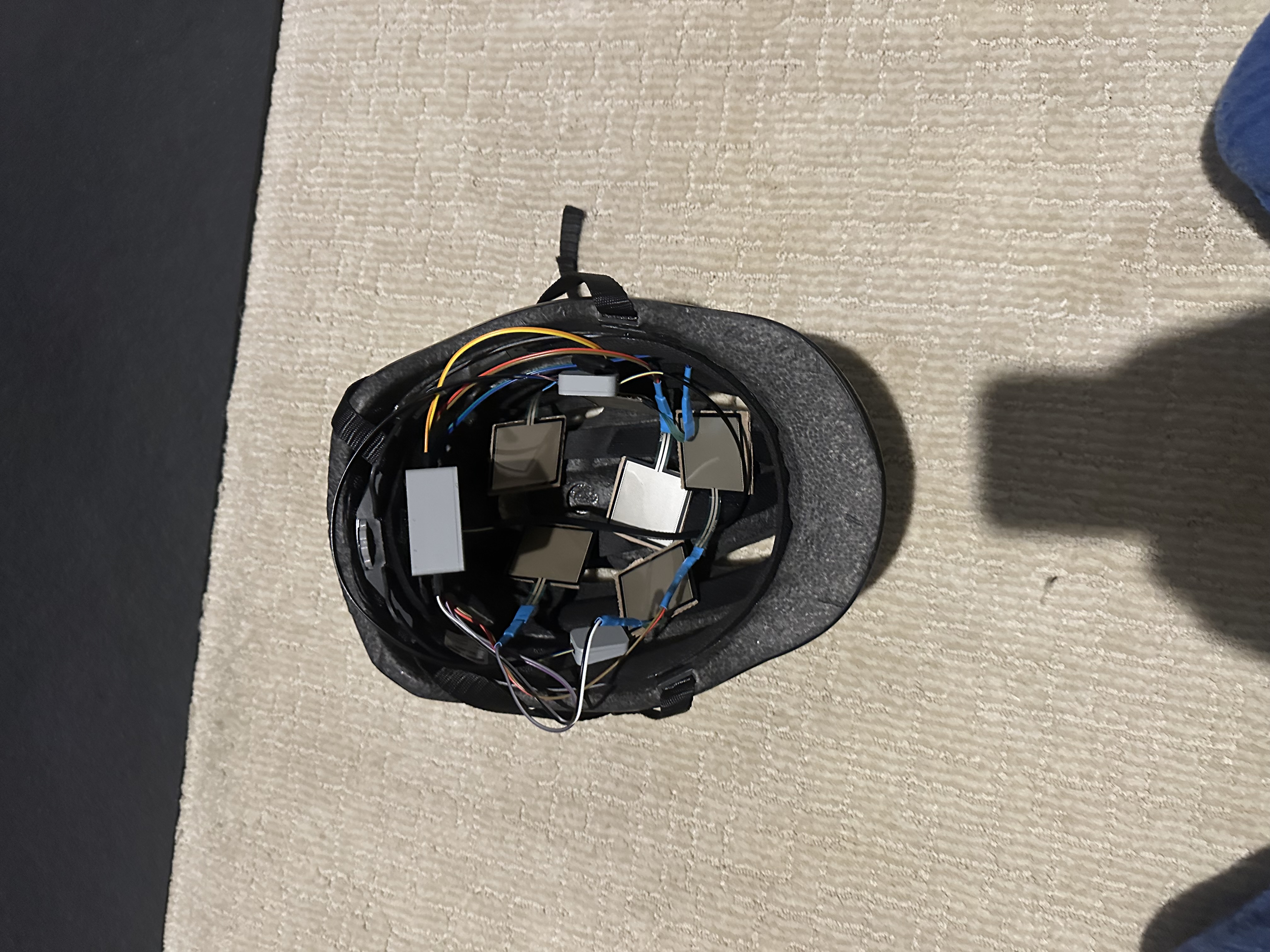
Engineered a helmet-embedded impact monitoring device integrating a custom PCB, multi-sensor array, and a 3D-printed protective casing to track subconcussive impacts.

PythonEmbedded SystemsPCB DesignBluetooth Low EnergyData AnalyticsFusion 3603D PrintingGoogle Workspace

The Problem

Repetitive head impacts (RHI) pose serious risks to many occupations, including construction workers, military personnel, and athletes. These impacts cause functional and structural brain changes over time. Soldiers exposed to blast events experience psychological function loss, while high school athletes in contact sports can suffer impairment even from a single practice session. Despite these dangers, there is a critical lack of reliable technology to provide live impact monitoring and severity assessment for those at risk.

The Solution

I developed a helmet-embedded prototype device capable of recording and measuring head impacts in real-time. The system integrated six force-sensitive resistors (FSRs) to detect pressure distribution and two triple-axis accelerometers to measure head acceleration. An ESP32 Feather V2 microcontroller managed data processing and Bluetooth Low Energy communication, powered by a compact lithium-ion polymer battery. All components were mounted on a custom PCB, housed in 3D-printed PLA cases, and cushioned with EVA foam for protection. I also built a Python-based user interface that received sensor data via Bluetooth, displayed live graphs correlating force spikes with acceleration changes, and calculated impact force using Newton's second law with user-inputted head mass parameters derived from head circumference measurements.

The Outcome

Through controlled drop-test trials comparing the device against a Vernier motion sensor control, the prototype achieved an average accuracy of approximately 86% (13.94% error). The system successfully recorded impacts and displayed real-time data through a custom-built user interface. This project was presented at the Loudoun County Public Schools Regional Science and Engineering Fair (LCPS RSEF) and won several awards, including Biomedical Engineering Aspiring Scientist Award, Collins Aerospace Award, Institute of Electrical & Electronic Engineers (IEEE) Technology Excellence Award, Potomac Section of American Industrial Hygiene Association (AIHA) Outstanding Project in Occupational and Environmental Health and Safety-Second Place.

Project Gallery

Monitoring Subconcussive Impacts Through a Helmet-Embedded Device screenshot 1
Monitoring Subconcussive Impacts Through a Helmet-Embedded Device screenshot 2

Project Resources

Technologies Used

PythonEmbedded SystemsPCB DesignBluetooth Low EnergyData AnalyticsFusion 3603D PrintingGoogle Workspace