Integrating Vocal Feedback to Optimize Neuromuscular Electrical Stimulation for Vocal Fold Paralysis
Lumped-Element 2-Mass Model · Interactive
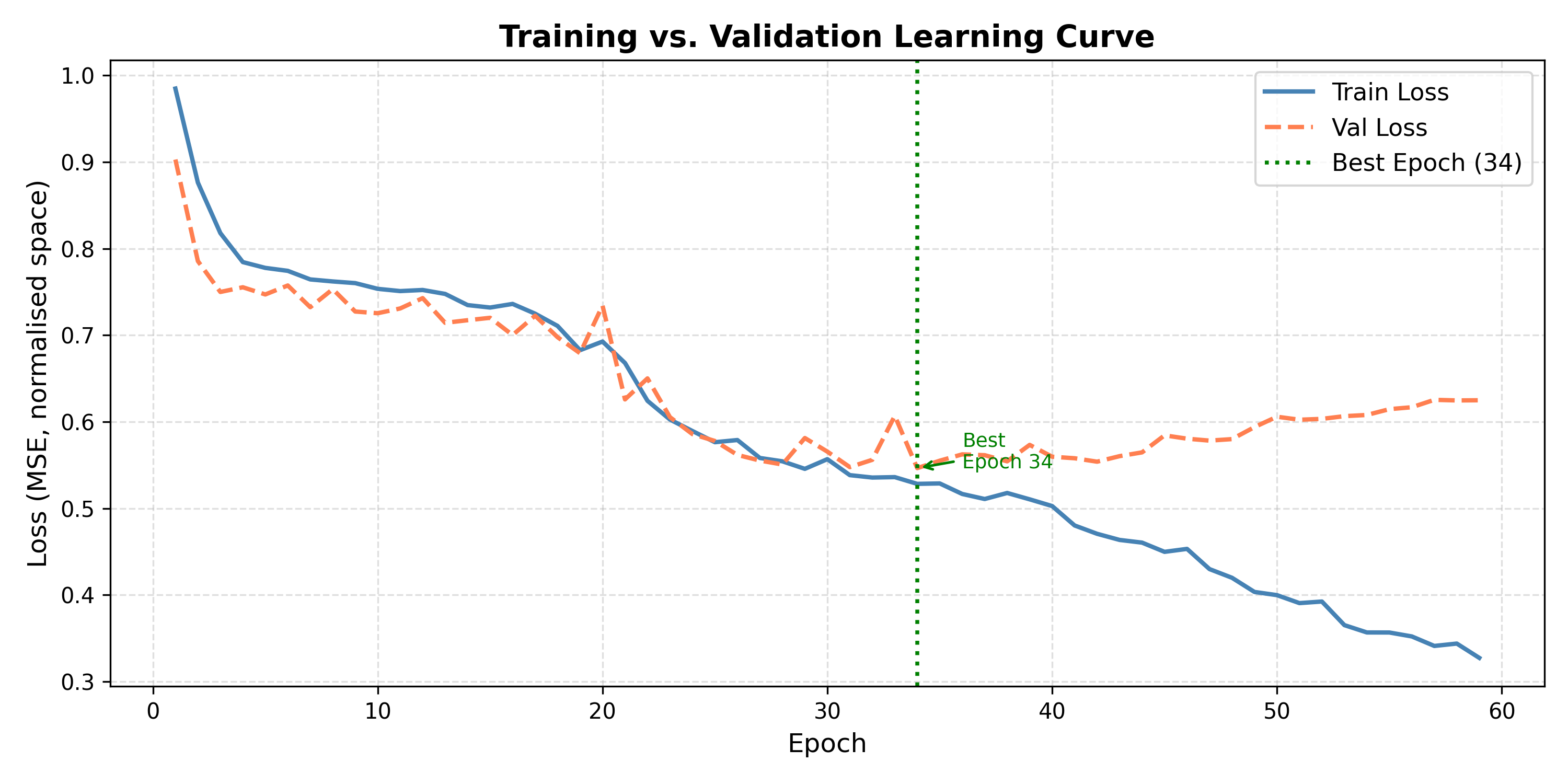
I modeled the vocal folds as a two-mass spring-damper system and generated 3,000 synthetic patient profiles spanning healthy to pathological tissue states, each paired with a biologically noisy acoustic signal. A CNN-LSTM then had to solve the inverse problem — listening to that signal and recovering the five hidden mechanical parameters underneath it. Training and validation loss converging together, shown above, confirmed it was learning real structure in the acoustics rather than overfitting.
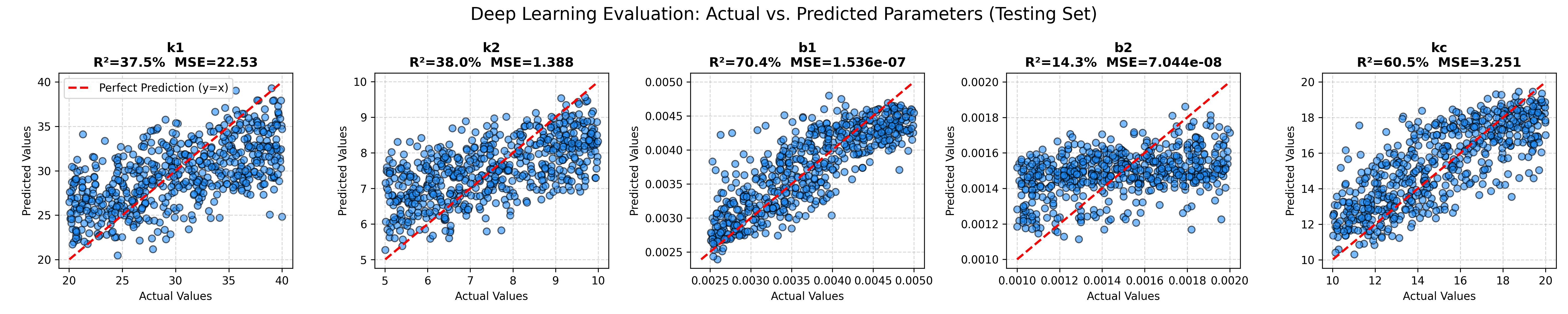
Recovery accuracy varied by parameter — strongest for Thyroarytenoid muscle tone (R²=70.4%) and Suprahyoid coordination (R²=60.5%), charted above. That's the result that matters: specific muscle-group degradation leaves an acoustically decodable signature, which is the computational proof-of-concept a future closed-loop NMES device would need. I presented this work in my RSEF poster at the 2026 LCPS Regional Science and Engineering Fair.
Top Skills